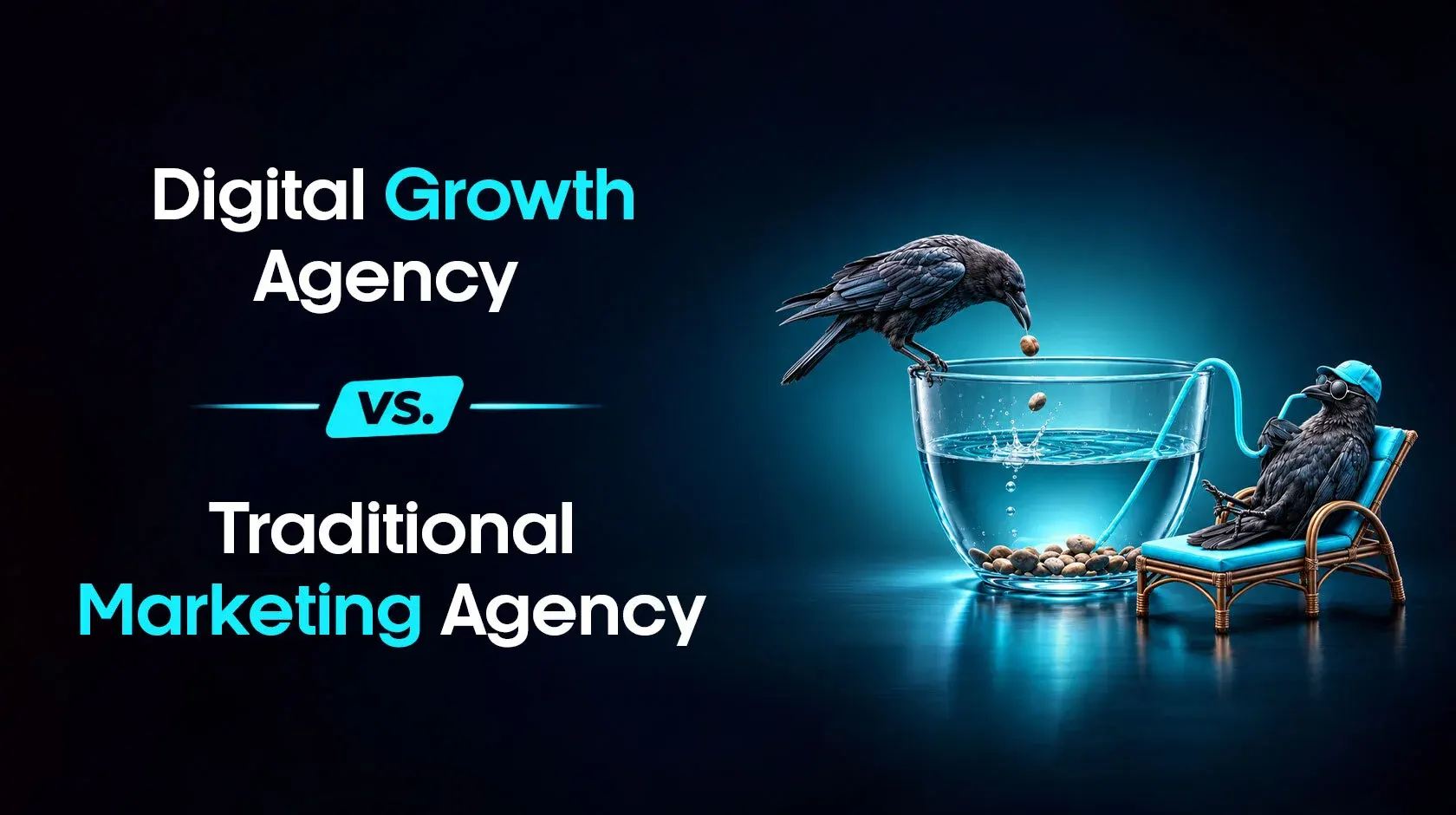
A digital growth agency ties its work to revenue. It runs tests, tracks every lead, and adjusts campaigns each week. A traditional marketing agency delivers campaigns, creative, and reports, and it usually measures success by reach and brand awareness.
So the choice depends on what you need. This guide compares both models side by side. You will see where each one wins and how to pick the right partner.
What Is a Digital Growth Agency?
A digital growth agency owns a business result, not just a task. The result could be more leads, a lower cost per customer, or faster revenue growth.
To get there, the team looks at the whole funnel. That means reviewing your offer, your landing pages, your ads, and how quickly leads actually get followed up.
Most growth teams work with tools like GA4, HubSpot, SEMrush, and Ahrefs. They connect ad data to your CRM so you can see which campaign produced a paying customer. That link between spend and sales is the core of growth marketing.
Some firms call themselves a digital growth marketing agency. The label changes, but the approach stays the same: test, measure, learn, repeat. For a broader view of the channels and tactics involved, read our digital marketing solutions guide.
What Is a Traditional Marketing Agency?
A traditional agency builds brand presence. It handles creative concepts, media buying, print, TV, radio, events, and PR.
The work often runs by project. You end up with a campaign, a batch of creative assets, and a report at the end. The agency’s focus usually centers on the click or the call, which suits brand campaigns well.
That is not a flaw. Brand building matters, especially for well-known companies. The gap shows up when you need fast, trackable growth.
Digital Growth Agency vs Traditional Agency: Quick Comparison
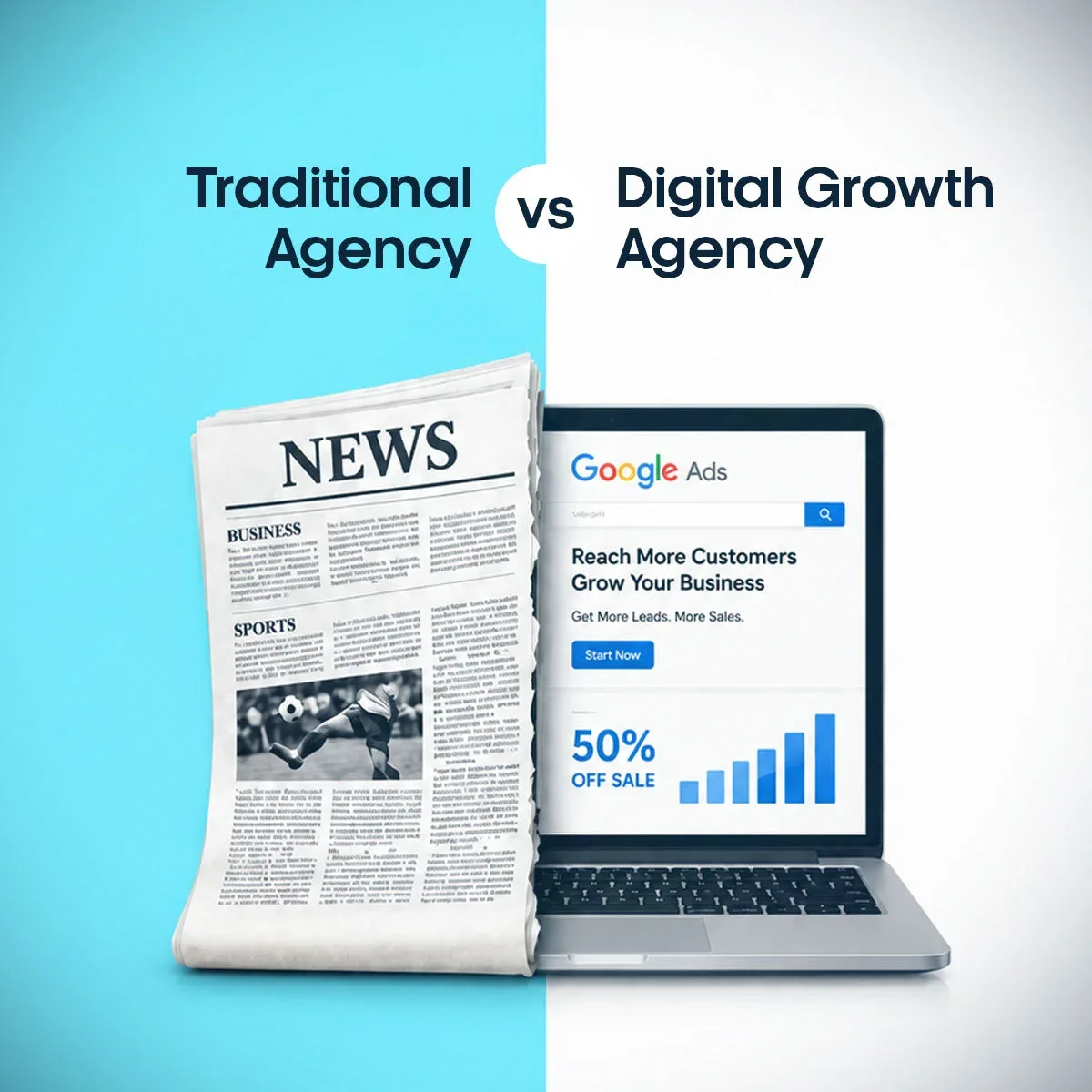
Here is how the two models differ on the factors that matter most.
| Digital Growth Agency | Traditional Marketing Agency |
| Starts with an audit of your funnel and data | Starts with a campaign brief |
| Focuses on revenue growth and customer acquisition | Focuses on brand awareness and reach |
| Tracks cost per lead, cost per customer, and ROAS | Tracks impressions, reach, and recall |
| Tests and changes campaigns every week | Runs longer campaign cycles |
| Uses Google Ads, Meta Ads, LinkedIn, SEO, and email | Uses TV, print, radio, events, and some digital |
| Gives live dashboards tied to your CRM | Gives periodic reports |
| Works as an ongoing partner | Works by project or deliverable |
| Charges a monthly fee, often with a performance bonus | Charges a fee per project or deliverable |
| Best for startups, small businesses, and online brands | Best for large brands with set sales systems |
The biggest gap is measurement. One model ties results to revenue, and the other ties them to reach.
Where a Digital Growth Agency Wins
Four strengths set this model apart:
- Speed. Digital channels give you data in days, not months. A growth team can pause a weak ad on Tuesday and move the budget to a strong one by Wednesday. It also runs A/B tests on ads and landing pages to lift conversion rates.
- Proof. Every dollar leaves a trail. Ad platforms, GA4, and your CRM together show which campaigns earned their budget and which ones quietly drained it. One CRM software client in Trackpad’s portfolio, for example, picked up 18,000+ trial signups while cutting customer acquisition cost by 27% through Google Ads funnels.
- Full-funnel focus. Fast follow-up turns fresh leads into paying customers. A growth team watches that handoff closely, then puts budget where it converts best.
Getting that handoff right makes every extra dollar of ad spend work harder.
- Budget control. Money is moving online. Gartner’s 2025 CMO Spend Survey found that digital channels take 61.1% of marketing budgets.
A digital marketing agency for business growth operates where most of the money already goes.
Where a Traditional Agency Still Helps
Do not write off the older model. It makes sense in these cases:
- You sell to large buyers who value trade shows and print.
- Your brand needs a strong, consistent look across many channels.
- Your sales process is solid, and you only need extra creative hands.
Many strong brands mix both. Brand awareness comes from the traditional side, and the growth team takes over once someone is ready to convert.
Benefits of Hiring a Digital Growth Agency
The benefits of hiring a digital growth agency go beyond running ads. Here is what you gain:
- Clear numbers. Every lead has a price tag you can name, and so does every customer.
- Faster learning. Small tests show what your market responds to.
- Less waste. Budget moves away from weak campaigns quickly.
- One team, many skills. Ads, design, web, and video work together.
- Easier scaling. Once a channel works, the team adds budget in steps.
That is digital agency growth in practice. Every month, you understand your buyer a little better than the month before.
Digital Growth Agency for Startups and Small Businesses
Small teams cannot afford guesswork. Every dollar has to work.
A digital growth agency for startups helps you find your first reliable channel. It tests offers, messages, and audiences on a small budget. Then it scales what works.
A marketing agency for small business also fills the gaps on your team, covering roles you have not hired for yet. A growth partner brings a media buyer, a designer, and a developer to the table from day one, all for a monthly fee.
When you look for a digital marketing agency for startups, pick one that sets up tracking on day one. With it, you can see clearly which channel deserves more money. If you need to connect that tracking to wider systems and workflows, see our post on digital transformation solutions.
Running an online store? A growth team can connect Shopify data to your ad accounts, so you optimize for sales, not clicks. Our guide on digital commerce solutions explains how.
What Should a Digital Growth Agency Offer?
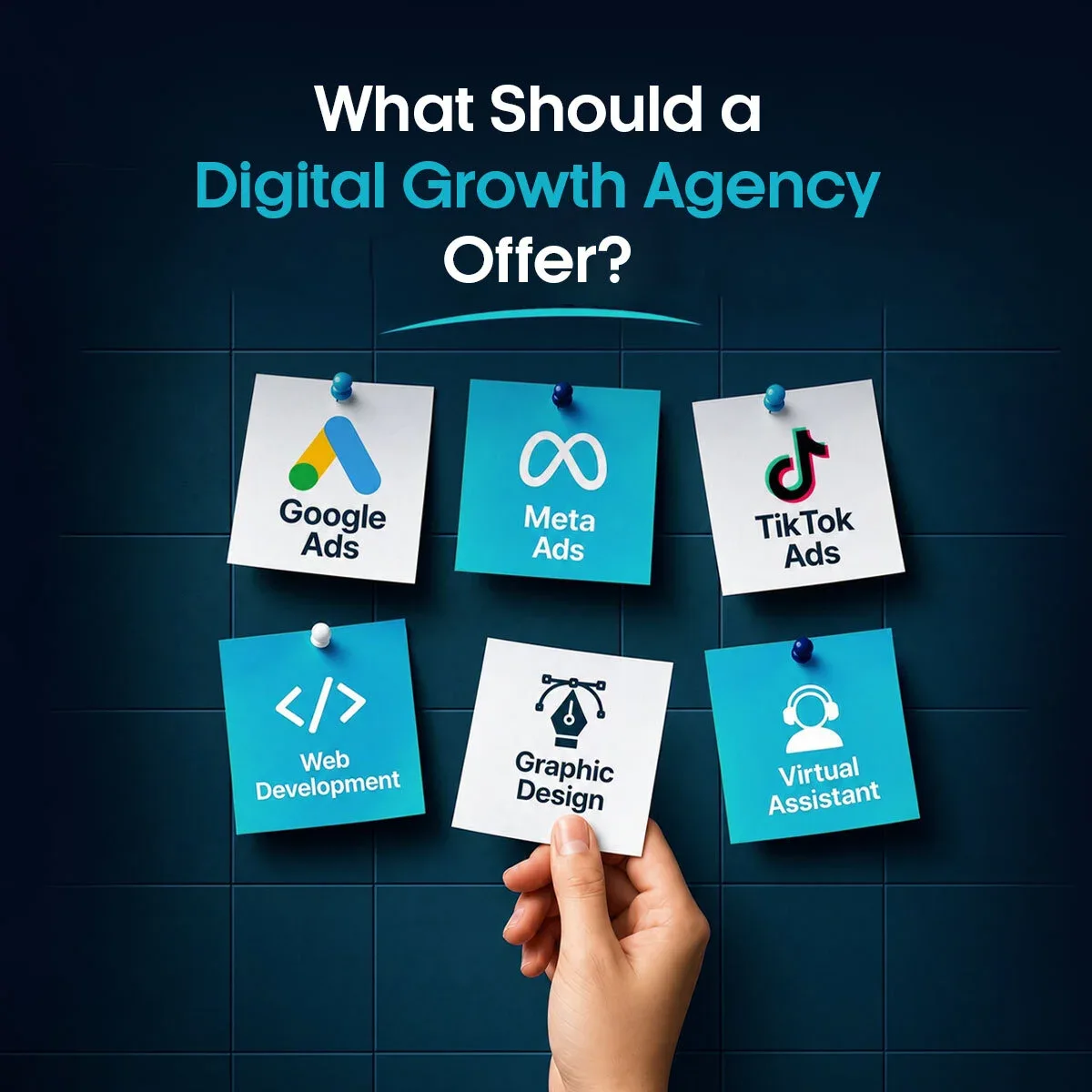
Growth rarely comes from one channel. Look for a partner that covers the full path from first click to sale. At Trackpad, that includes:
- Google Ads to capture people who are already searching.
- Meta Ads to warm up cold audiences and bring back people who have already visited. One herbal store client hit a 5.8X average ROAS this way.
- TikTok Ads to put your product in front of people who have never heard of you, using short video.
- Web development so pages load fast and visitors actually stick around long enough to convert.
- Graphic design for the ad creatives themselves, plus the brand assets that sit around them.
- Video editing for ads, reels, and product demos that need to look polished before they go live.
- Virtual assistant support to handle lead follow-up and the daily tasks nobody on your team has time for.
These services work best together. Ads bring the traffic, and design, web, and video turn it into customers. To plan the right mix of ad channels, see our guide to digital advertising solutions.
5 Questions to Ask Before You Hire
Ask these before you sign anything:
- Which business metric will you move? Clicks are a start, but leads, sales, or revenue matter more.
- Who runs my account, and how much time do they give it?
- How do you track results? Ask about GA4, your CRM, and Salesforce or HubSpot integration.
- Who owns the ad accounts and data? You should own both.
- What happens if targets are missed? A good partner has a clear answer.
The right firm will answer these in plain words, and that kind of clarity is a good sign.
Which One Should You Choose?
Use this quick test to decide.
Pick a digital growth agency if:
- Your sales are real but unpredictable.
- You invest in ads and want a clear cost per customer.
- You need to scale fast with a lean team.
Pick a traditional agency if:
- Your funnel and sales process already run well.
- Your main need is brand creative or offline media.
If you have the budget, you can also use both: brand reach from one, measurable conversion from the other.
FAQs
What does a digital growth agency do?
It plans, runs, and improves marketing channels to increase leads, customers, and revenue. It ties every campaign to a business result.
Which is better, a digital growth agency or a traditional one?
Both models have real strengths. If you need acquisition you can measure, and you need it soon, the digital growth route usually wins. If the job is purely brand building, a traditional agency still does it well.
How much does a digital growth agency cost?
Cost depends on scope. Some firms charge a flat monthly retainer, others a base fee plus a performance bonus, and some take a percentage of ad spend. Ask for a clear scope before you commit.
Can a small business hire a digital growth agency?
Yes. A growth partner gives a small team access to ads, design, web, and video skills without full-time hires.
How soon will I see results?
Ad data shows up within days. Steady revenue growth usually takes a few months of testing and tuning.
Final Thoughts
Traditional agencies build awareness. A digital growth agency builds a system that turns attention into customers and tracks every step. For startups and small businesses that need clear returns, that difference matters.
Ready to see what a digital growth agency can do for your numbers? Book a free 30-minute call with Trackpad.