Choosing a digital marketing solutions company comes down to five checks. Look for proof from businesses that make money the way yours does. Ask for reports that start with profit, not clicks. Keep every ad account in your name. Pick one team for ads, web, and creative. And sign a contract you can walk away from.
That sounds simple. But most agency pitches look alike, and the wrong pick wastes months of budget.
What Does a Digital Marketing Solutions Company Actually Do?
It plans, runs, and measures your online growth as one system: paid ads, website, creative, email, CRM, and tracking. A single-channel vendor handles one piece and leaves the rest for you to stitch together.
When a single team owns the ads, landing pages, and follow-up emails, you can trace every sale back to the dollar that started it. That is what complete digital marketing solutions should deliver: one plan, one owner, one set of results. Our guide on digital marketing solutions breaks down the eight core services and what each costs.
Step 1: Define the Business Problem Before You Shop
Most bad agency hires start with a vague goal. “We need more traffic” sounds clear, but traffic is not revenue. Plenty of brands double their visibility and see no change in sales.
So name the real problem first, then pick the metric that proves it is fixed. Here is how common goals map to the numbers that matter:
- Need more leads: cost per lead (CPL) and lead-to-customer rate.
- Selling online: return on ad spend (ROAS) and repeat purchase rate.
- Long B2B sales cycles: sales-qualified leads and pipeline value.
- Unknown brand: branded search volume and new audience reach.
Write the goal, the metric, and your monthly budget (ad spend included) on one page before your first call. That page becomes your business strategy brief, and it keeps any agency from steering you toward whatever it sells best. Online stores can sharpen it with these proven digital commerce solutions.
Agency, Freelancer, or In-House: Which Model Fits?
Before you compare agencies, decide whether you need one at all. Here is how the four main options compare:
| Model | Best for | Cost level |
| Freelancer | One clear, short-term task | Lowest |
| In-house hire | Steady, high-volume work | Salary plus tools |
| Specialist agency | One channel that already works | Medium |
| Full-service digital growth agency | Scaling across several channels | Medium to high |
A b2b digital marketing company with LinkedIn and CRM depth suits long sales cycles. And if growth depends on channels like Meta Ads and TikTok Ads working together, one full-service team usually costs less than managing four vendors yourself.
6 Ways to Vet a Digital Marketing Solutions Company
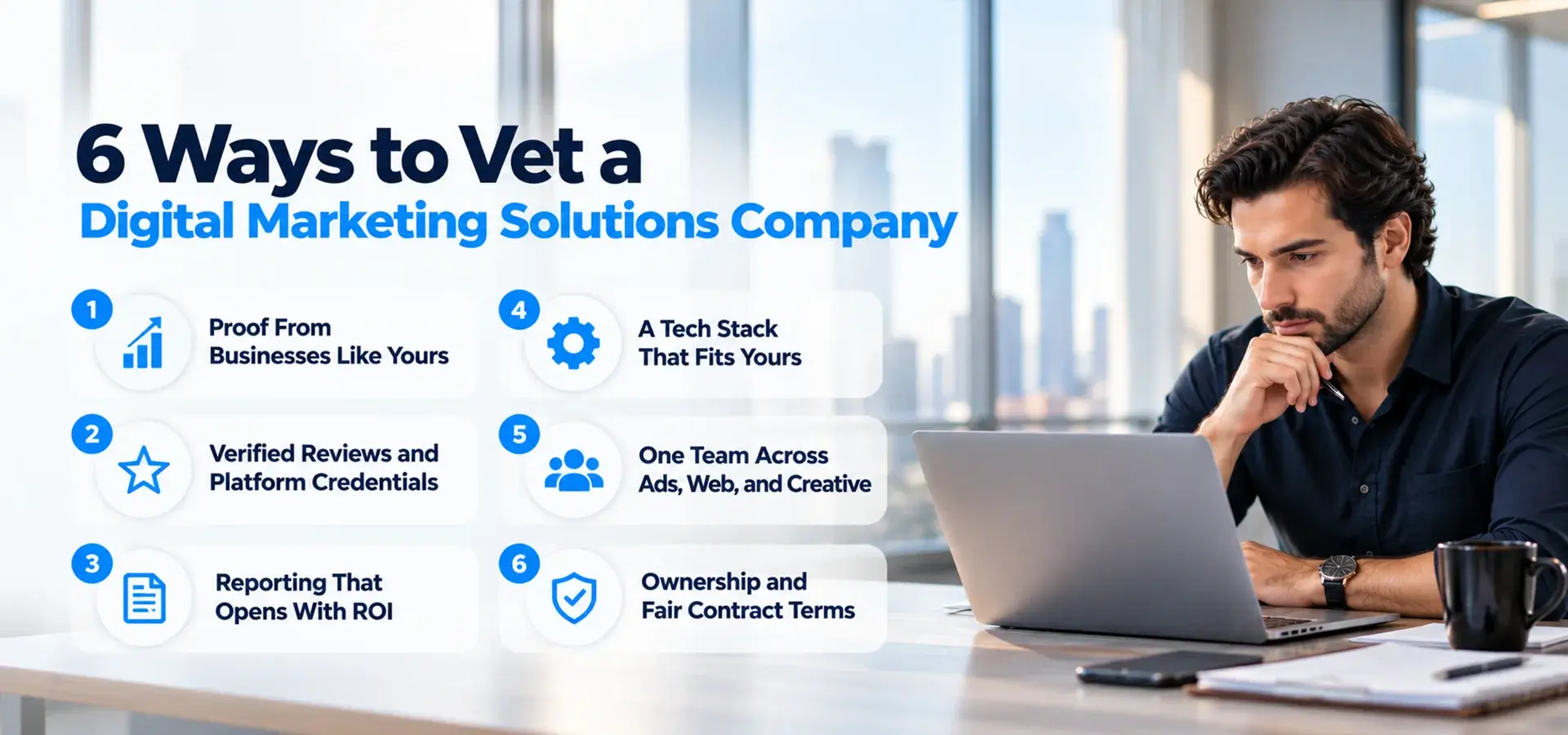
Shortlist three agencies. Then run each one through these six checks.
1. Proof From Businesses Like Yours
Ask for two case studies from companies that earn money the way you do. Big e-commerce wins say little about B2B lead generation. Check that each case study shows a starting point, an end point, a budget, and a timeframe. Then ask to speak with one current client.
2. Verified Reviews and Platform Credentials
Open the agency’s Clutch profile and read three full reviews, not just the star rating. A useful review reads like “cost per lead fell from $90 to $52 in four months.” A weak one just says the team was great. Look the reviewers up on LinkedIn to confirm they work where they claim. Then check the Google Partners directory and Meta Business Partners listings. Both programs vet agencies before listing them, so a “millions in managed spend” claim without a badge needs an explanation.
3. Reporting That Opens With ROI
Ask for a sample monthly report. Page one should show cost per acquisition, ROAS, and revenue — not impressions and likes. Everything should be tracked in GA4 and tied to your sales data. Ask who owns analytics on their team, because a broken GA4 setup can double-count conversions and make every report look better than it is. Good reporting answers three questions: what happened, why, and what changes next. Real transparency also means you can log in to every ad account any day.
4. A Tech Stack That Fits Yours
If your sales team lives in HubSpot or Salesforce, ask how leads flow from ads into your CRM and back again. That loop teaches ad platforms which clicks turn into paying customers. For SEO, ask whether they use Ahrefs or SEMrush, and request a sample audit. Ask how they use AI, too. A strong answer covers feeding clean conversion data to Google and Meta bidding, and getting your brand cited in AI search answers. You can check reviews of any tool they recommend on G2.
5. One Team Across Ads, Web, and Creative
One team fixes problems faster than four vendors can argue about them. Say leads drop 30% in a month. The ad agency blames the slow landing page, the developer blames the traffic, and nobody owns the fix. When one team runs your ads and web development, the page gets fixed that week. Creative works the same way: a tired static ad gets new versions from graphic design, and video editing turns footage you already have into fresh Reels, Shorts, and TikTok clips. That speed is the real payoff of custom digital marketing solutions.
6. Ownership and Fair Contract Terms
Get it in writing: your ad accounts, pixel, analytics, website, and creative files belong to you. Some agencies set these up under their own login, which traps you if you leave. Ask how they handle privacy rules like California’s CCPA, too. A 30-day notice period is fair. A 12-month lock-in with no performance clause is not. A healthy agency partnership earns renewals with results, not paperwork.
8 Questions to Ask Before You Sign
Here are the questions that separate partners from vendors:
- Who runs my account day to day, and how many other clients do they handle?
- Which of your services should I skip right now?
- What appears on page one of your report?
- Will I get full admin access to every ad and analytics account?
- How will you connect ad data to our CRM?
- What results did you get for a business like ours, and how fast?
- How often will we meet, and who attends?
- What happens to my accounts if we part ways?
Question 2 tells you the most. An agency that admits you don’t need everything is advising you. One that says you need it all is selling.
What It Costs and When You’ll See Results
Most agencies price their work in one of four ways:
- Monthly retainer: a flat fee for ongoing management.
- Percentage of ad spend: fees rise as your budget grows.
- Project fee: one agreed price for a job with an end date, such as a 10-page Shopify store.
- Performance-based: fees tied to leads or sales, usually with a base fee.
As a rough guide, small U.S. businesses often spend $2,000 to $7,000 a month, ad budget included. Mid-sized companies tend to spend $10,000 to $40,000.
Paid ads can bring leads within days, though most campaigns need a few weeks of data before costs settle. SEO usually takes three to six months to show clear gains. That is why many brands run Google Ads first, learn which keywords convert, then build SEO around the winners. To see which paid channels move fastest, compare these lead-driving digital advertising solutions.
Why Brands Choose TrackPad as Their Digital Growth Agency
TrackPad handles every service under one roof: paid ads, web, creative, and automation. That covers 2D animation for product explainers and a virtual assistant team for daily admin. One team means one report and nobody pointing fingers when numbers dip.
As a digital solutions marketing company, we build every account in your name from day one. Our reports lead with ROAS and cost per lead. That approach has served 150+ brands and driven $480M in client revenue.
Frequently Asked Questions
What should I look for when choosing a digital marketing agency?
Case studies from your industry, reports built around ROI, full ownership of your accounts, and one team covering ads, web, and creative.
How do I choose a digital marketing agency for a small business?
Begin with one measurable goal and one channel. Choose an agency that tells you what to skip and offers short, flexible contracts.
Is a bigger agency always better?
No. Large agencies often move slower and hand smaller accounts to junior staff. Choose the team whose skills match your goals, whatever its size.
What makes the best digital marketing solutions company?
It connects every dollar to revenue, explains results in plain language, and tells you what not to buy.
The Bottom Line
The right digital marketing solutions company proves results in your business model, reports on profit, and leaves you owning everything. Define your goal, run the six checks, and ask the eight questions.
Rethinking your wider systems too? See where marketing fits in our guide to digital transformation solutions. Ready to put us through the same test? Book a free strategy call, and we’ll review your ads, funnel, and tracking in 30 minutes.