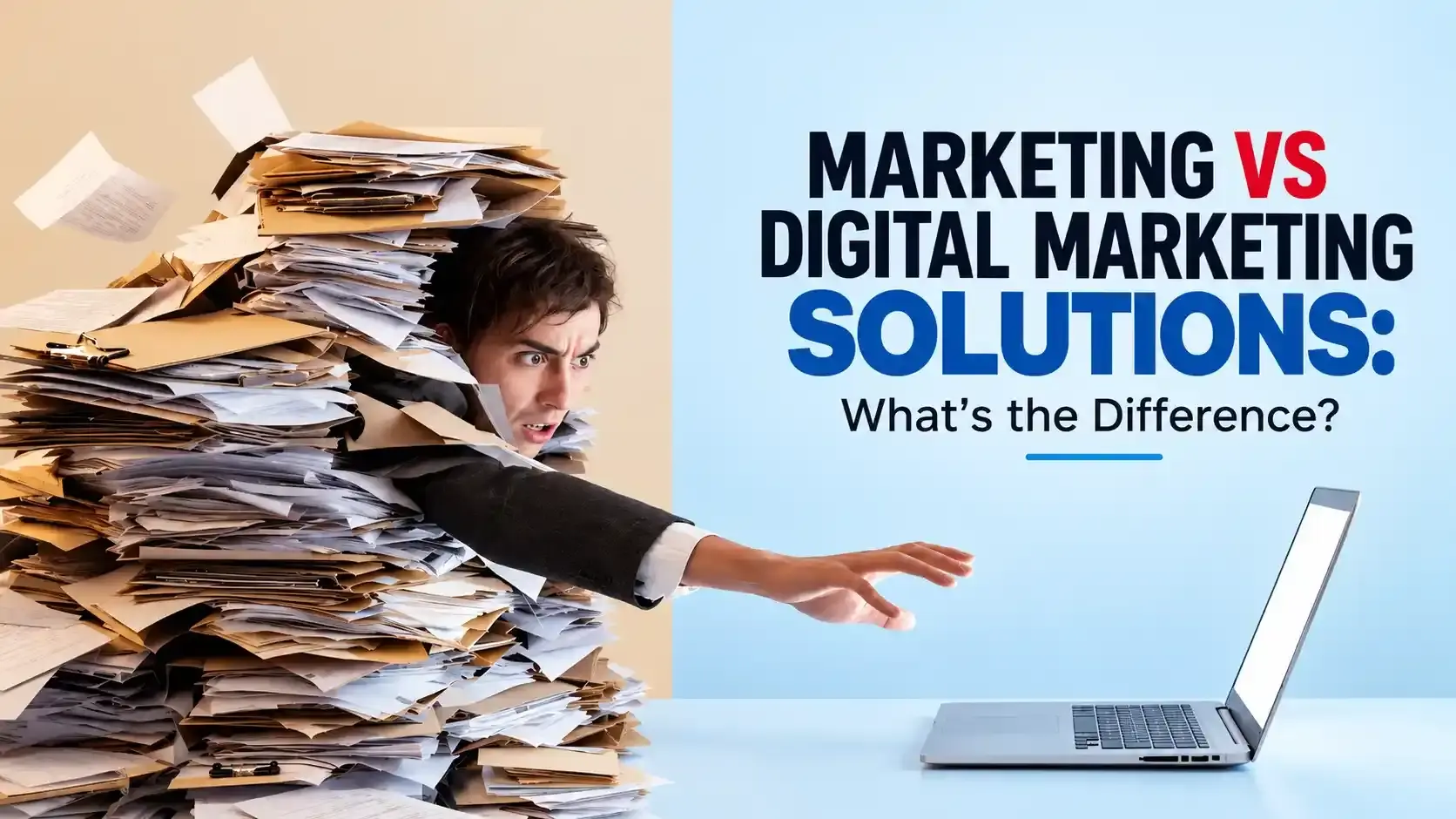
Marketing is what brings people to your business. Turning them into buyers takes something else: a website, a CRM, analytics, automations. Those are your digital solutions.
Put marketing and digital solutions on the same system: every ad click lands on a fast page, and every lead gets logged. This guide covers what each side includes, where they overlap, and the most important part: which one should you fund first.
What Is Marketing?
Everything a business does to find, win, and keep customers falls under marketing. It begins with a marketing strategy built on market research, positioning, pricing, and a clear message. Then it runs through two kinds of channels.
- Traditional marketing covers print ads, TV and radio spots, billboards, direct mail, trade shows, and public relations. Local reach and credibility come with it; traceable results, less so.
- Digital marketing is SEO, PPC on Google Ads, social media marketing across Meta Ads and TikTok Ads, YouTube, LinkedIn, Mailchimp email marketing, influencers, and online reputation.
Branding is what holds both branches together through the logo, colors, and voice. Consistent graphic design is what makes a billboard and a Facebook ad read as one brand.
Either way, marketing’s job ends the moment someone clicks, calls, or walks in. Everything after that point belongs to your digital solutions.
What Are Digital Solutions?
Digital solutions are the tools, platforms, and services that keep your business running online. They capture interest, convert it, and measure what happened. Ads go quiet the moment spend dries up. These don’t.
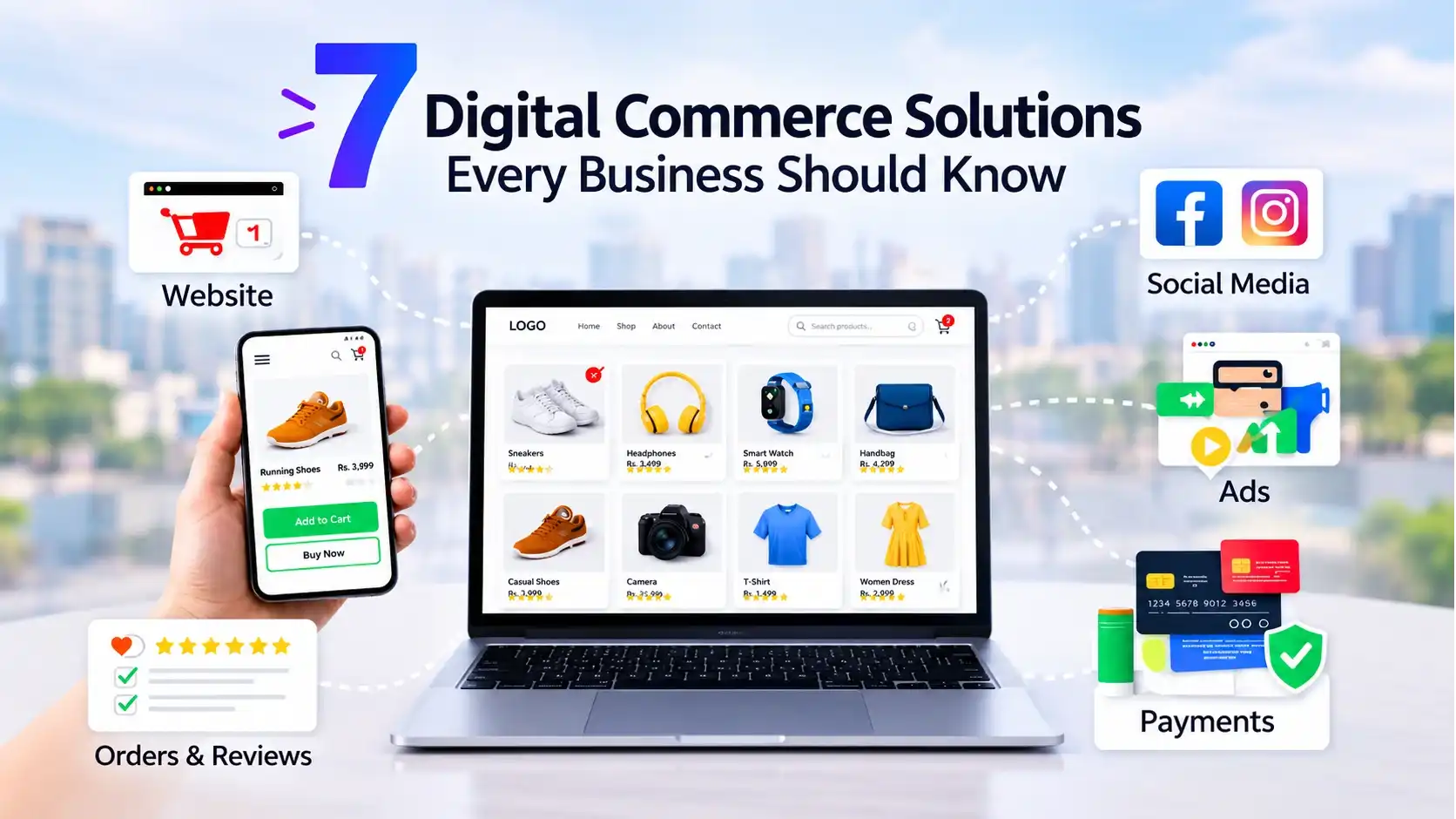
- Website or online store. A fast, mobile-friendly site on WordPress or a store on Shopify, built through conversion-focused web development with CRO running on an ongoing basis.
- CRM. Something like HubSpot, holding every lead, deal, and customer conversation in one place.
- Tracking and reporting. GA4 records visitor behavior, and key events in GA4 flag the actions that matter, a purchase being the obvious one.
- Automation. Zapier or N8N workflows pass data between apps so nobody retypes an order.
- Operations support. A virtual assistant for inbox tasks, order updates, and data entry.
Once these upgrades spread across a whole company, they become digital transformation solutions.
Marketing vs Digital Marketing vs Digital Solutions: Side-by-Side
People usually mix up three terms here, not two.
| Factor | Traditional Marketing | Digital Marketing | Digital Solutions |
| Main job | Build awareness offline | Attract and convert buyers online | Capture, serve, and measure buyers |
| Channels or tools | Print, TV, radio, billboards, events | Google, Meta, TikTok, YouTube, LinkedIn, email | WordPress, Shopify, HubSpot, GA4 |
| How you measure it | Promo codes, call counts, surveys | Clicks, leads, cost per lead, ROI | Conversion rate, page speed, hours saved |
| Best for | Local reach and broad credibility | Targeted, trackable growth | Turning traffic into revenue |
The lines blur in places. Landing pages are web assets built for campaigns. Conversion tracking is analytics that also shapes ad bidding on Google and Meta. Offline ads can join in too. A QR code on a flyer, or a dedicated number on a billboard, can send someone to a page you can track. Plan all three together, and the best digital marketing solutions get better.
How Integrated Marketing and Digital Solutions Work Together
Integrated marketing and digital solutions mean one shared strategy, one customer journey you can follow end to end, and one team on the hook for revenue. Picture a U.S. home decor brand selling on Shopify.
- Attract. A 15-second clip from our video editing team runs on Meta and TikTok, backed by a short 2D animation showing the product assembling.
- Land. Click through, and the matching product page loads fast on mobile.
- Track. GA4 counts add-to-cart and purchase as key events, then feeds that data into bidding on Google and Meta.
- Follow up. Leave a cart behind and Mailchimp sends a reminder; wholesale inquiries route to HubSpot.
- Improve. Each week, a report shows which ad, page, and email produced sales. Budget shifts toward whatever won.
When steps two through four break, step one costs the same as it always did. We see this constantly in new account reviews: strong creative pointing at slow pages nobody is tracking.
Which One Does Your Business Need First?
Fix whatever is costing you the most.
Traffic but few sales. Shore up the digital side first. Speed up pages, simplify checkout, and get tracking in place before you raise ad spend.
Good conversion but thin traffic. Put money into marketing. Google search ads reach ready-to-buy visitors, so start there, then test Meta and TikTok.
Leads that go cold. Add a CRM with automated follow-up. Every inquiry should hear back the same day.
A team buried in admin. Automate the repeat tasks or bring in virtual support, and let your people sell.
A launch or rebrand. Build the site and tracking first, then run ads, PR, and offline promotion at the same time, all pointing to one tracked page.
Most businesses need both, just in different amounts at different stages. That’s why custom digital marketing solutions beat fixed packages. The best marketing solutions for business growth target your actual bottleneck rather than a price tier.
How to Choose a Digital Solutions Marketing Company
Agencies come in three flavors. Traditional marketing agencies handle media buys, PR, and events. Digital marketing agencies run ads, SEO, and social. A full-service digital solutions marketing company covers the marketing plus the websites and tracking behind it.
Six questions worth asking before you sign:
- What would you fix first for us, and why?
- Can you show results tied to revenue, not just clicks and likes?
- Do you build and fix websites in-house?
- Will we own our ad accounts, GA4 property, and website?
- What does reporting look like, and how frequently does it land?
- Who handles our account day-to-day?
A reliable, complete digital marketing solutions company answers all six without hedging and leads with strategy rather than tactics. Watch out for long lock-ins, vague reporting, and any agency that won’t hand over admin access to your accounts.
Marketing and Digital Solutions Under One Roof at Track-Pad
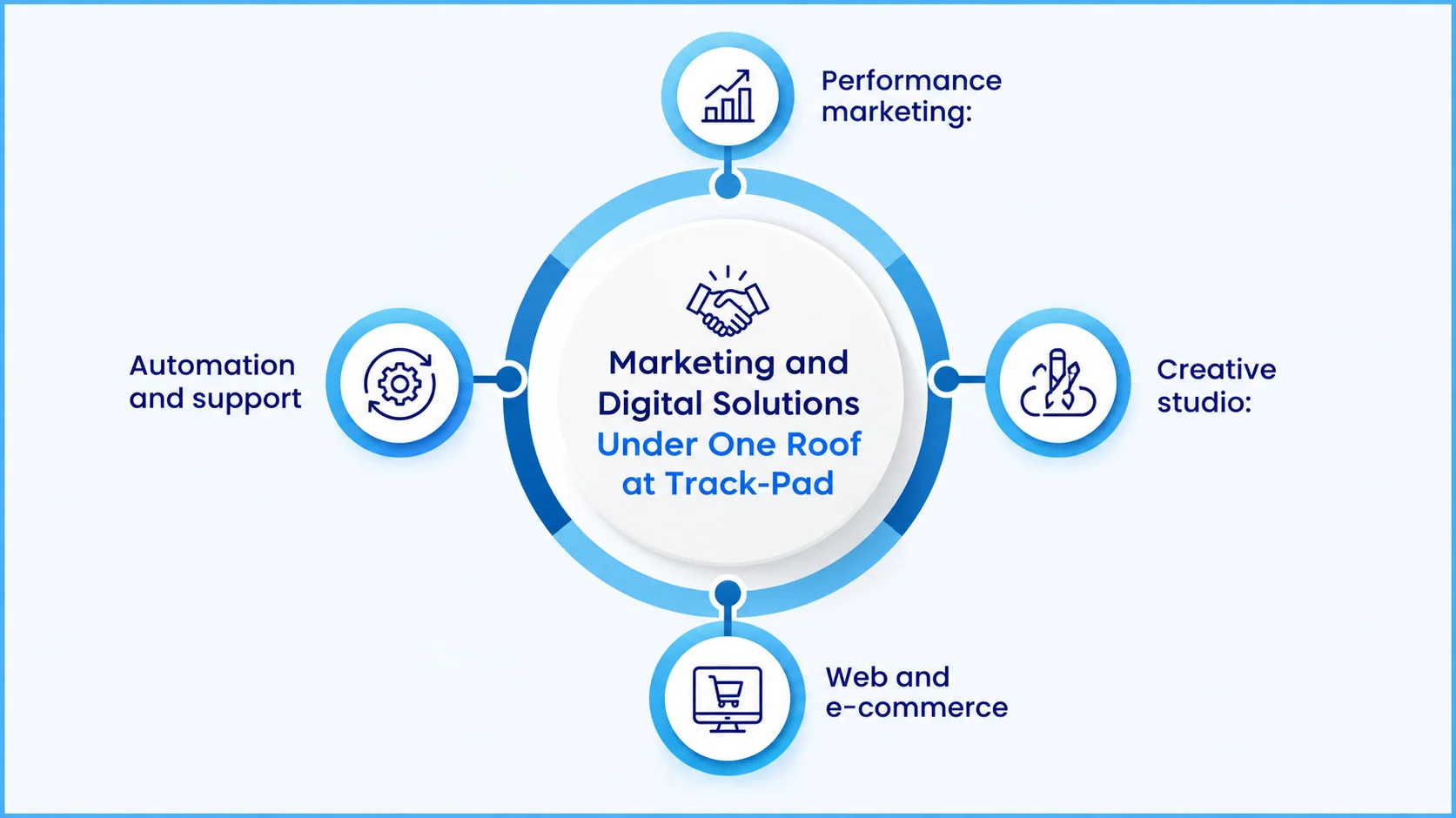
Track-Pad runs both sides from one team, so your ads, website, and creative follow a single plan.
- Performance marketing: Google, Meta, TikTok campaigns run against sales targets, not vanity metrics.
- Creative studio: The studio side. Cutdowns, animation, design work. All of it built for the feed it’s going into, not some generic spec sheet.
- Web and e-commerce: Sites and stores on WordPress or Shopify. Fast enough that nobody bounces, wired so every click gets counted.
- Automation and support: Zapier and N8N workflows, plus virtual assistants for daily operations.
Everything sits under one roof, which means one digital strategy, one contact, one report instead of three random vendors who never talk.
FAQ’s
What is the difference between marketing and digital solutions?
Marketing attracts and persuades buyers. Digital solutions are the websites, CRM, tracking, and automations that convert them and keep operations moving.
Is digital marketing the same as marketing?
No, marketing’s the broader term. It swallows research, pricing, print, TV, events, PR. Digital’s just one slice of it.
Is digital marketing the same as digital solutions?
Different animals. Digital marketing covers the outbound push: ads, search visibility, social posts. Digital solutions are the plumbing underneath: website, CRM, the rest.
Does a small business need both?
Usually, yes. Ads without a working website waste money, and a great website without marketing gets few visitors. Whichever leak is bigger, plug that one first.
How much do businesses spend on marketing?
Gartner’s 2026 survey puts the average at 7.8% of company revenue. Smaller brands in growth mode often spend a larger share.
The Bottom Line
Marketing and digital solutions do different jobs, but they only pay off together. Marketing brings the right people in, online or off. Digital solutions make sure the page loads, the visit gets tracked, and every lead hears back quickly. Fund one and ignore the other, and part of your budget leaks away.
Want both sides working from one plan? Talk to the Track-Pad team today.